


Road Signs Through the Lens

Updated: Aug 7
The Typography of Place
Some signs direct. Others endure.
These are markers from Australia and New Zealand
Stories of isolation, humour, and history.
No GPS required.


Oodadatta Track
The new breed of roadside signs
The Oodnadatta Track starts with a billboard. Sans-serif. QR code. Sponsors.
A woman photographs it, dwarfed by its scale.
It is clean. It is temporary. The gibber plain beneath it is neither.
The edge of the map
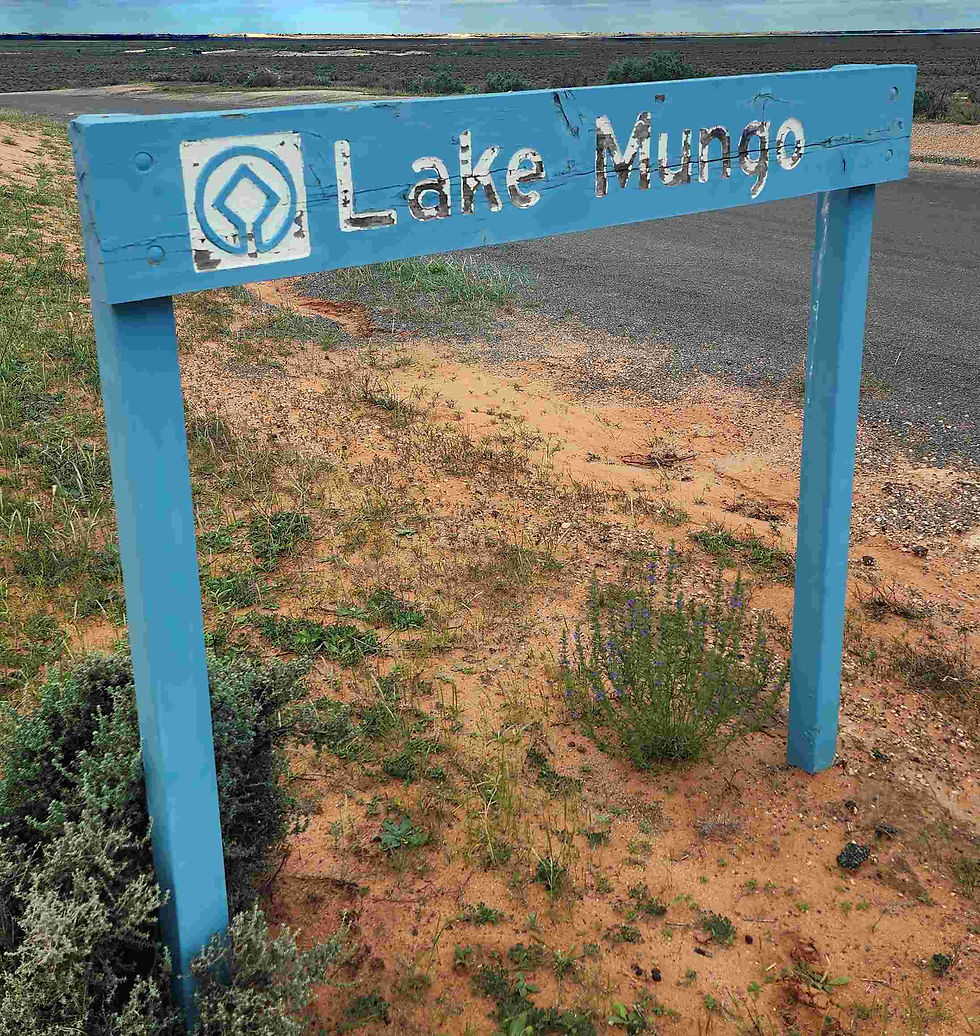
At Lake Mungo, even the official signs seem shaped by the landscape.
A faded blue sign stands in red dirt and open country, its paint worn by heat, dust and time. It marks a protected place, but it also feels as if the land has already claimed it.
That is the thing about remote signs.
They may begin as official markers, but the weather edits them.
New Zealand jokes
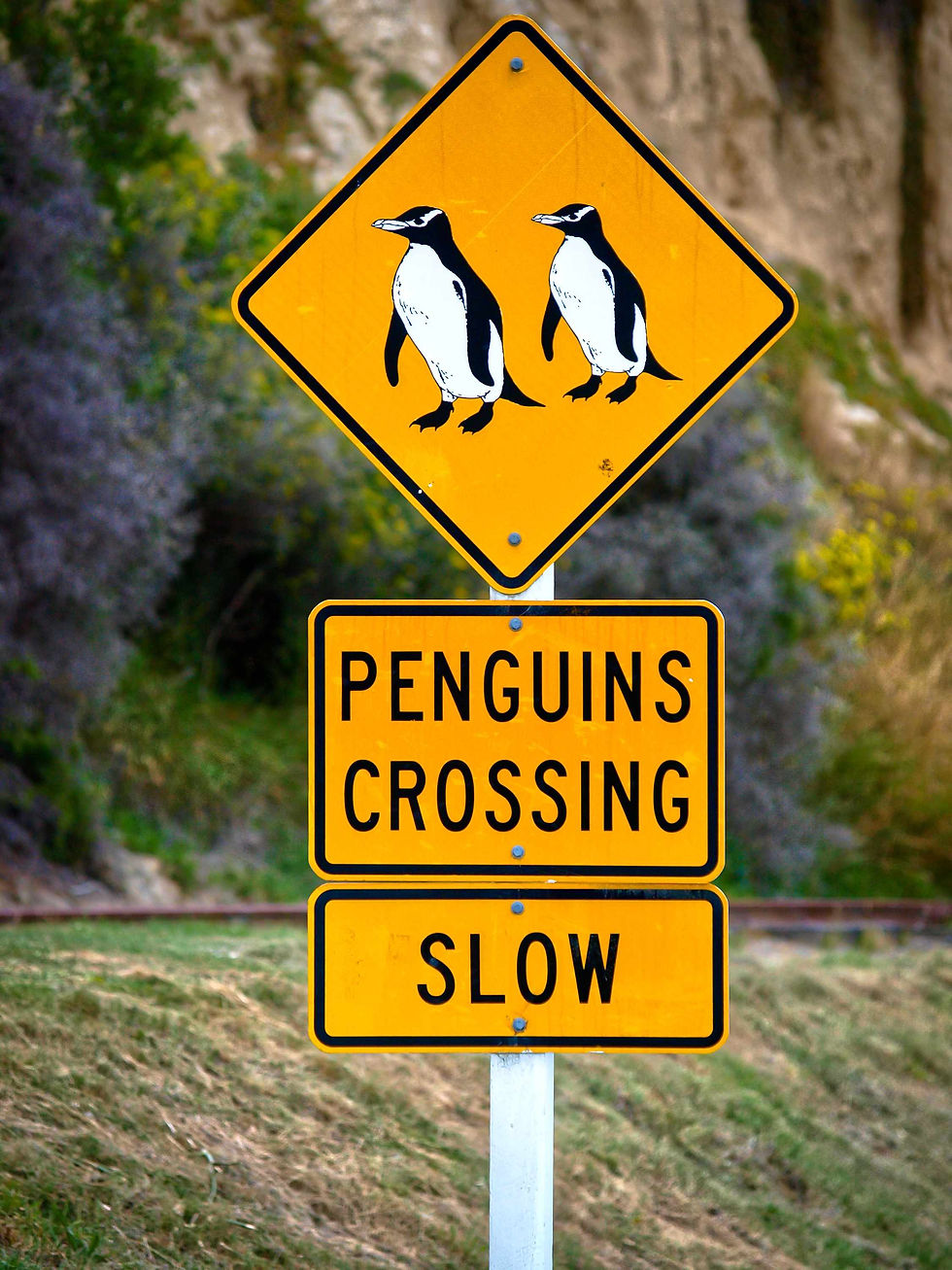
Penguins crossing.
A yellow diamond warns of waddling traffic. And yet it is also quietly funny.
Two penguins on a road sign feel like classic New Zealand: serious about wildlife, casual about charm, and completely comfortable placing a small moment of delight beside a public safety message.
You slow down because you should.
You smile because how could you not?
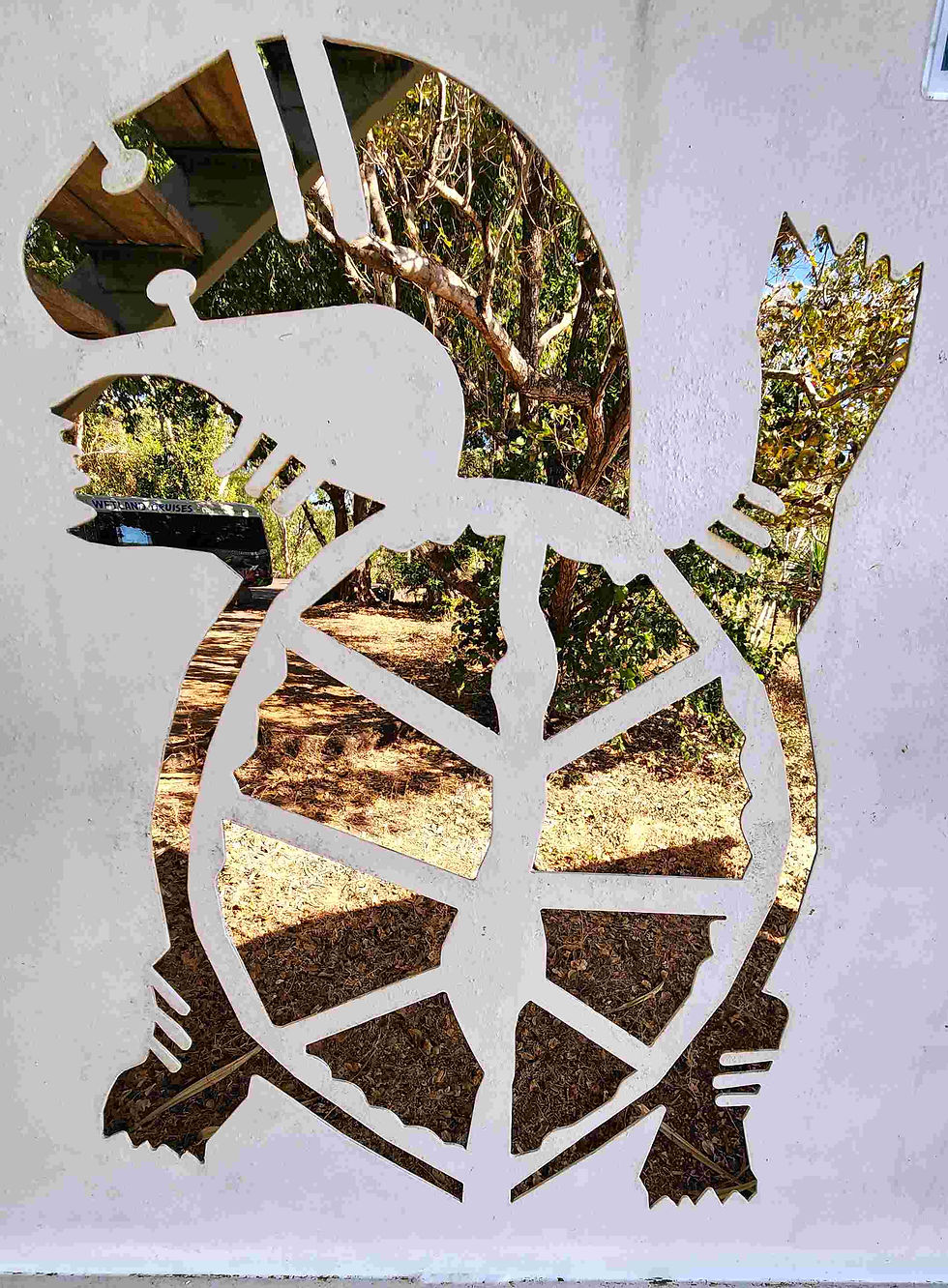
When words fail, cutouts speak.
Fogg Dam, Northern Territory.
No text.
Just Aboriginal imagery punched through white metal.
The landscape becomes the language.
This is signage you feel before you read.

Even shrines forget.
Whaitiri Point shelters a plaque for "The Lake House."
The hotel vanished decades ago.
The weatherboard shrine silvered.
The type remains, pinned behind glass like a memory that refuses to leave.
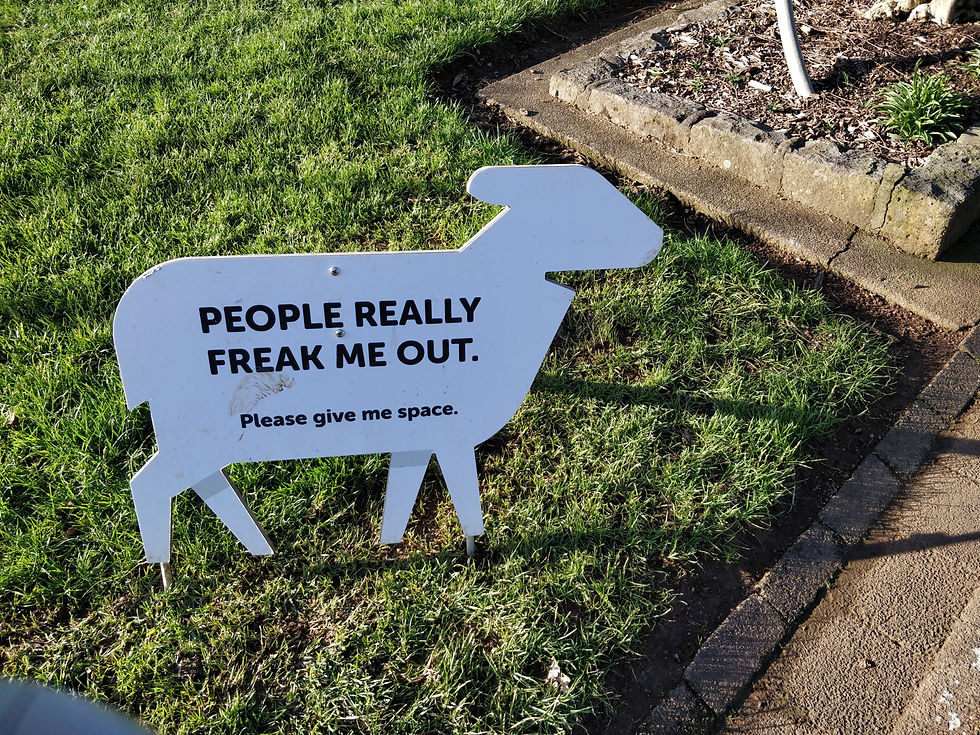
“People really freak me out” sheep sign
Some signs give directions.
This one gives a sheep’s honest emotional boundary.
The message is funny, but the point is serious: wildlife, farm animals and curious travellers all do better with a little respectful distance.
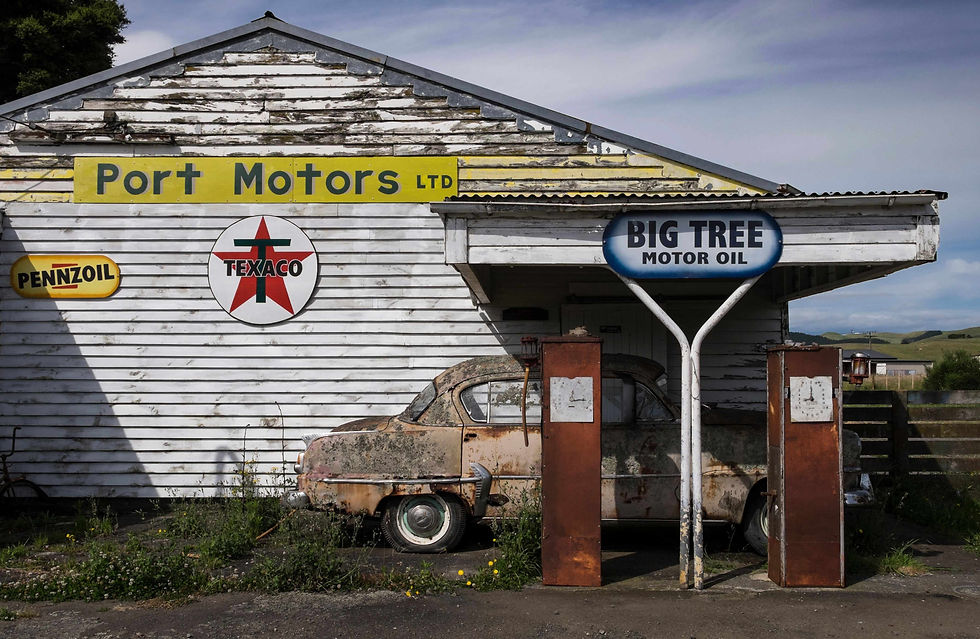
Ghosts sell petrol.
Ormondville. A rusting car sleeps beneath vintage Texaco and Pennzoil signs. Big Tree Motor Oil. The logos outlasted the customers.
On the Forgotten Highway, a derelict van still advertises Winstone Glass. Cement deliveries no more. Just moss and rust.

Cromwell Chafer Beetle Nature Reserve sign
The Cromwell Chafer Beetle Nature Reserve sign is wonderfully specific. Most travellers will never see the beetle itself, which makes the sign the main encounter: a small official marker for a tiny endangered creature living quietly in a vast Otago landscape.

Civic signs with personality
Then there is Wellington.
The huge hillside WELLINGTON sign greets arriving passengers with big corrugated letters and a wind-tossed sense of humour.
It is part airport welcome, part civic branding, part weather report.
The letters are bold and industrial, but they also feel very Wellington: slightly dramatic, slightly battered, and not remotely apologetic about the wind.
Wind included, No extra charge.
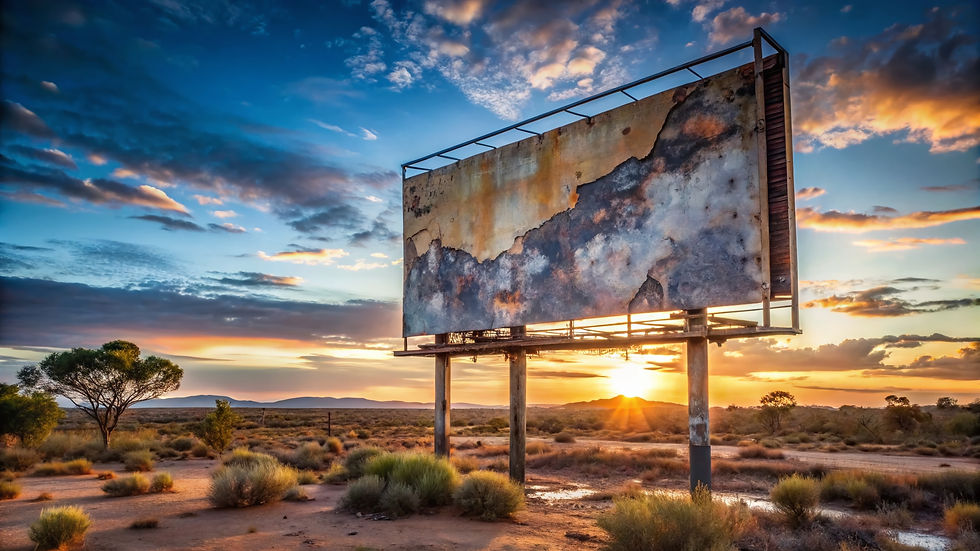
Monument to distance
A weathered roadside billboard stands empty in the outback light, its message long gone but its presence still powerful. With sunset burning through the frame, it feels less like advertising and more like a monument to distance, silence and roads that keep their own stories.
Why photograph signs?
Because signs are small pieces of place.
They show what a community wants you to know.
They reveal what a road considers dangerous. They hint at humour, identity, industry, memory and change.
A beach sign tells one kind of story.
A kangaroo sign tells another.
A penguin crossing tells another.
A rusting petrol sign tells another again.
Photographing signs is not just about collecting quirky roadside details.
It is about noticing how places speak.
Sometimes in official type.
Sometimes in fading paint.
Sometimes in rust.
Sometimes in a kangaroo silhouette against a sunset.
The last word
Road signs are the footnotes of geography.
They do not command.
They simply wait.
The wind edits them.
The sun italicises them.
The road continues.
Continue exploring
For more everyday travel details, continue to Fences Through The Lens.
For road-trip mood and regional detours, explore the Slow Travel Philosophy Guide.
For more landscape stories from overlooked places, indulge in the joy of unexpected stops..


