

Mungo National Park Travel Guide: Ancient Landscapes, Outback Roads & the Walls of China

Updated: Oct 12
Where outback silence meets deep time
Mungo National Park is not a place to rush.
It sits in south-western New South Wales, within the World Heritage-listed Willandra Lakes Region, and carries a sense of time that makes ordinary travel schedules feel slightly absurd.
This is a landscape of dry lakebeds, eroded lunettes, red-dirt roads, pastoral ruins, fragile formations, Aboriginal cultural history, and outback light that changes everything it touches.
For many travellers, Mungo National Park is known for the Walls of China, the dramatic pale formations shaped by wind and erosion along the edge of ancient Lake Mungo.
But the park is far more than a viewpoint.
It is one of Australia’s most significant cultural landscapes, a place connected to deep Aboriginal history, scientific discovery, changing climates and continuing custodianship.
This is not the outback of oversized icons and quick photo stops. Mungo asks for more care than that.
Come prepared. Travel slowly. Check road conditions.
Listen to the stories.
Stay on marked tracks. Understand that the landscape you are looking at is not empty.
It is layered with memory.
Mungo is best understood as the final chapter of a longer journey. Start with our Mildura, Wentworth & Mungo National Park slow travel guide.
Why visit Mungo National Park?
Mungo National Park is one of the most powerful places in inland Australia.
It has the visual drama of an outback landscape, but its real force comes from what the land holds. Ancient shorelines, dry lakebeds and wind-shaped dunes tell a story of water, climate and human presence stretching back tens of thousands of years.
The park is deeply significant to Traditional Owners, and the discoveries of Mungo Lady and Mungo Man changed the way many Australians understood the depth of Aboriginal history on this continent.
Visitors come for the scenery.
They leave thinking about time.
Where is Mungo National Park?
Mungo National Park is in south-western New South Wales, north-east of Mildura and Wentworth, and south-west of Balranald.
For most visitors, the practical gateway is Mildura in Victoria or Wentworth in New South Wales. Both towns work well as bases before or after visiting the park.
Mildura offers accommodation, food, fuel, riverfront walks, visitor information and regional services.
Wentworth offers the Murray-Darling junction, heritage buildings, Perry Sandhills and a useful transition from river country toward outback landscapes.
Mungo National Park naturally belongs within a wider slow travel route:
Mildura → Wentworth → Perry Sandhills → Mungo National Park
This is the strongest way to understand the region. You move from river country to sand country, then into the ancient dry lake landscapes of Mungo.
Before you set off, read the Mildura Travel Guide and Wentworth Travel Guide. Our Mildura to Mungo road trip guide covers the drive itself.
How long do you need at Mungo National Park?
Mungo can be visited as a long day trip from Mildura or Wentworth, but that is not the best version of the experience.
A day trip is possible if roads are open, the weather is suitable, and you start early. However, the park rewards time. Distances are longer than they look, unsealed roads slow the journey, and the best light often arrives when rushed visitors are already leaving.
A better plan is:
One day: enough for the visitor centre, Walls of China viewing area, short stops and a taste of the landscape.
Two days: better for a guided tour, pastoral heritage stops, slow photography, sunset or sunrise light and a less frantic return.
Three days: ideal if you want to connect Mungo with Mildura, Wentworth, Perry Sandhills and wider river country.
If you are building a regional itinerary, do not treat Mungo as a quick attraction. Treat it as the reason the journey slows down.
Best time to visit Mungo National Park
The best time to visit Mungo National Park is during the cooler months: autumn, winter and spring.
Summer can be brutally hot. Exposed tracks, dry lakebeds, reflective surfaces and long unsealed roads can make travel uncomfortable and potentially unsafe. Heat also changes what you can realistically do in the park.
Autumn brings softer light and more comfortable travel conditions.
Winter can be cold, especially early and late in the day, but it is excellent for walking, photography and clear outback skies.
Spring can bring changing colour, birdlife and more comfortable days, although weather and road conditions still need checking.
Before travelling, always check the weather and road updates. Heavy rain can affect unsealed roads quickly, and closures should be taken seriously.
Road conditions: read this before you go
Mungo National Park is remote. Access roads are unsealed, and conditions can change with weather, maintenance and traffic.
Do not rely only on a mapping app.
Before leaving, check:
current NSW National Parks alerts, local council road reports, weather forecast, fuel range, water supplies, food supplies, vehicle conditions, spare tyre, phone coverage expectations, daylight driving time
Roads may be corrugated, dusty, muddy, closed or unsuitable after rain. If a road is closed, do not drive it. Turning around is not a failed road trip. It is common sense.
Avoid driving at dawn, dusk or night where possible. Wildlife is more active, visibility is reduced, and help may be a long way away.
Best Bits road truth
In outback NSW, “it’s only a short drive” can mean three different things: open road, corrugations, and one unexpected conversation with a road-closed sign.
Cultural respect at Mungo
Mungo National Park is a living cultural landscape.
It is not simply a scenic outback stop. It is a place of continuing Aboriginal connection, deep history and cultural significance. Visitors should approach the park with humility, not entitlement.
Respect signs, closures and guidance. Stay on marked tracks. Do not climb fragile formations unless access is clearly permitted. Do not remove anything. Do not treat ancestral stories as tourist curiosities.
Where possible, join a guided experience led by Aboriginal guides or authorised interpreters. Mungo is a place where context matters. Without it, you may see shapes, colours and dunes. With it, you begin to understand why the landscape matters.
The Walls of China
The Walls of China are the best-known feature of Mungo National Park.
These sculpted formations rise along the edge of the ancient lakebed, shaped by wind, water, erosion and time. Their pale ridges and folded textures are extraordinary in changing light, especially early or late in the day.
But this is also a fragile and culturally significant landscape.
The best way to experience the Mungo lunette is through a guided tour.
A guide helps explain what you are seeing: the ancient lake system, the erosion, the human history, the animal remains, the cultural significance and the reasons access is managed carefully.
The Walls of China are beautiful from a distance.
They are more meaningful when you understand why you must move carefully around them.
Walls of China viewing platform
The Walls of China viewing platform gives visitors a designated place to appreciate the lunette landscape without damaging sensitive areas.
This is an important stop, especially for travellers who cannot join a guided walk or are visiting when access conditions are limited. The platform allows you to see the formations, take photographs and understand the scale of the ancient lake edge while staying within managed visitor areas.
Go slowly here. Read the signs. Watch how the light moves across the formations. The landscape changes with every cloud, shadow and hour of the day.
Mungo Visitor Centre
Begin at the Mungo Visitor Centre.
This should not be treated as an optional stop. The visitor centre provides essential context for understanding the park’s cultural, geological and pastoral stories. It helps explain why Mungo matters, how the ancient lake system formed, and why the area is protected.
It is also the practical place to check conditions, confirm what is open and orient yourself before exploring further.
If you are short on time, the visitor centre and the Walls of China viewing area should be your priorities.
Zanci Woolshed and pastoral history
Mungo’s story is not only ancient.
Zanci Woolshed and nearby pastoral remains tell the more recent history of sheep stations, European occupation, labour, isolation and adaptation in semi-arid country. The weathered buildings sit quietly in the landscape, but they add another layer to the park’s story.
This is one of the reasons Mungo is so compelling. It is not a single narrative. It is ancient Aboriginal connection, geological change, pastoral history, scientific discovery and modern conservation all occupying the same space.
Walk slowly around the site and imagine the effort required to live and work here before modern roads, communications and comfort.
Mungo Woolshed
Mungo Woolshed is another reminder that the park was once part of a working pastoral landscape.
The building’s scale, materials and setting reflect the history of grazing in the region. It is easy to focus only on the Walls of China, but the pastoral sites are worth your time because they explain more recent human attempts to use and survive in this dry country.
They also provide useful contrast.
The ancient lakebed speaks in thousands of years.
The woolshed speaks in generations.
Together, they widen the story.
The Mungo loop drive
The self-guided loop drive is one of the best ways to experience the scale of the park when conditions allow.
The loop takes visitors through changing landscapes, with stops connected to lakebeds, dunes, pastoral remains, viewpoints and natural features.
It is not a drive to hurry. The road surface, dust, wildlife and scenery all encourage slower travel.
Check current conditions before setting out. Sections may close due to weather, maintenance or safety concerns.
Carry water. Allow more time than expected. Stop often. This is not a highway. It is part of the experience.
Vigars Well
Vigars Well is one of the park’s atmospheric stops.
It speaks to the practical realities of movement through dry country: water, survival, stock routes and the ways people and animals used the landscape. The surrounding dunes and dry lakebed textures also make it a memorable place for slow observation.
It is tempting to arrive, read the sign, take a photo and move on. Resist that instinct.
Stand still for a few minutes. Listen. Watch the surface of the sand. Notice how the landscape seems spare at first, then gradually becomes detailed.
Mungo reveals itself slowly.
Red Top Lookout and boardwalk
Red Top Lookout and boardwalk offer another perspective on the eroded landscape, with views across formations shaped by wind and time.
This is a strong photography stop, particularly when the light is low, and shadows create texture. As always, stay on designated paths and follow any closure notices.
The formations are fragile. Their beauty depends on visitors not treating them like a playground.
Wildlife and birdlife in Mungo
Mungo may look dry and still, but it is not lifeless.
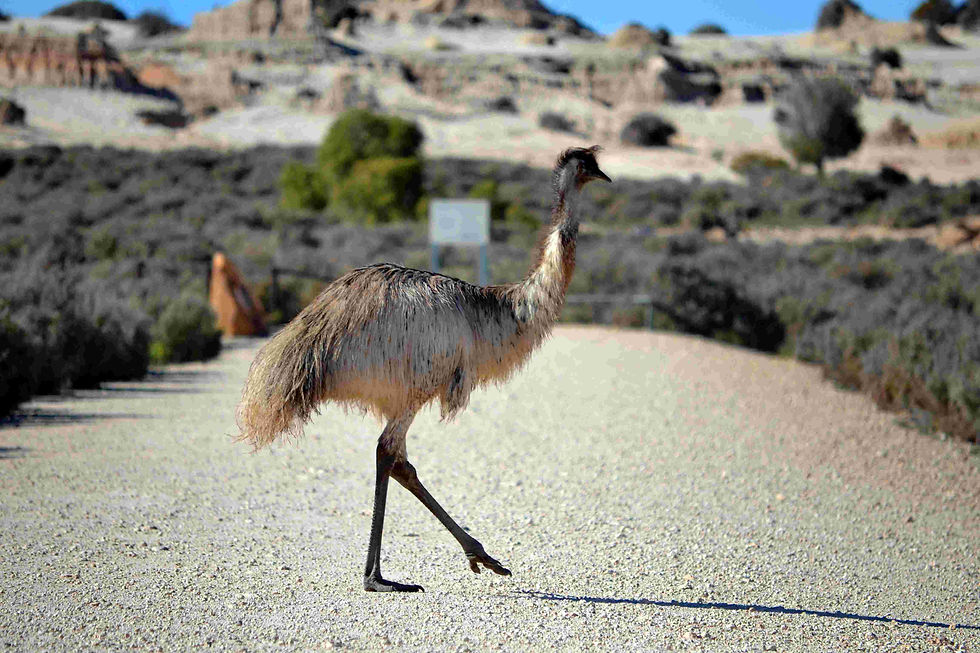
Look for kangaroos, emus, reptiles, birds of prey and smaller desert life. Birdwatchers may find the region especially rewarding after rain or during cooler parts of the day.
Wildlife is one reason to avoid driving at dawn, dusk and night. Animals can appear suddenly on roads, and long-distance travel becomes more dangerous when visibility drops.
Bring binoculars if you enjoy birdlife, and use quiet observation rather than chasing photographs.
What are the photographic conditions at Mungo?
Mungo is a gift for photographers, but it demands patience.
The best light is usually early morning or late afternoon. Midday light can be harsh, flattening colour and texture. Sunset can bring gold, pink and blue tones across the lunettes and dry lakebed. Dust, cloud and shadow can transform the same view within minutes.
Photography tips:
Use wide shots to show scale. Look for texture in sand and erosion. Include foreground details, watch the changing light, avoid walking off designated areas for a better angle, respect cultural restrictions, and do not photograph people or guided groups without permission.
Mungo is not a backdrop. Photograph it with care.
Can you visit Mungo National Park without a 4WD?
This depends on current road conditions, recent weather and your vehicle.
Many travellers visit Mungo in 2WD vehicles when roads are dry and open, but unsealed roads can become unsuitable quickly after rain. Corrugations, dust, mud and closures are all part of the reality of travel here.
A high-clearance vehicle can be useful, but the most important things are preparation, current information and good judgement.
Check before you go. If conditions are poor, delay the trip.
The park will still be there.
What to pack for Mungo National Park
Bring more than you think you need.
Essentials include:
water, food, sun protection, hat and sunglasses, closed walking shoes, offline map, paper map or downloaded route notes, first-aid kits, spare tyre and basic tools, insect repellent, warm layer in cooler months, camera or binoculars, rubbish bag, full fuel tank before leaving town
Do not assume you can buy what you forgot near the park.
Remote travel rewards boring preparation.
Where to stay for Mungo National Park
There are several ways to approach accommodation.
Mildura is the most practical base, with the widest range of accommodation, restaurants, fuel, supermarkets and visitor services.
Wentworth is quieter and closer to the Murray-Darling junction, Perry Sandhills and the transition toward outback road travel.
Mungo-area accommodation or camping may suit travellers wanting more time in the park, sunset light or a slower experience. Book ahead and check availability.
If you are only visiting for a day, Mildura or Wentworth are the easiest bases.
If you want to feel the landscape rather than simply visit it, stay closer or allow a slower itinerary.
How much time is needed to visit Mungo?
Mungo can be visited as a long day trip from Mildura or Wentworth, but it is a much better experience when you allow at least two days.
Start with the Mungo Visitor Centre, the Walls of China viewing area, and the pastoral heritage sites, then use a second day for the self-guided drive, Red Top Lookout, Vigars Well and slower photography stops if road conditions allow.
A full Mungo itinerary is best treated separately, because timing depends on road conditions, guided tour availability, daylight hours and whether you are returning to Mildura, Wentworth or staying closer to the park.
Mungo as part of the Mildura, Wentworth and Mungo ecosystem
Mungo National Park works best when connected with the wider region.
Mungo is not floating alone in the outback. It belongs to a wider journey through water, sand, settlement, culture and ancient land.
Responsible travel at Mungo
Responsible travel at Mungo is simple, but important.
Check conditions before you go.
Do not drive on closed roads.
Stay on marked tracks.
Respect cultural guidance.
Do not climb fragile formations unless access is specifically permitted.
Take all rubbish with you.
Avoid disturbing wildlife.
Support local communities before and after your visit.
Travel slowly enough to understand where you are.
Mungo is a place where behaviour matters. The landscape is fragile, significant and still speaking.
Who should visit Mungo National Park?
Mungo is ideal for travellers who enjoy:
ancient landscapes, outback roads,
Aboriginal cultural history,
photography,
geology, quiet places, slow travel, heritage sites, big skies, regional Australia beyond the obvious
It may not suit travellers looking for easy entertainment, resort-style comfort, constant phone reception or a quick roadside attraction.
Mungo does not perform on demand.
It waits for you to pay attention.
Best Bits final thought
Mungo National Park is one of those places that changes the scale of your thinking.
At first, you notice the road, the dust, the heat, the distance and the strange pale shapes of the Walls of China.
Then the deeper story emerges.
Ancient lakes. Human presence. Cultural memory. Pastoral ruins. Fragile formations. Scientific discovery. Living custodianship. The sense that the land has been keeping time long before anyone arrived with a camera.
Come prepared.
Move carefully.
Stay longer than you planned.
Mungo is not just a place to see.
Where to stay
This post includes affiliate links. If you book through them, Best Bits Travel may earn a small commission at no extra cost to you.
FAQs
How do you get to Mungo National Park?
Most visitors drive from Mildura, about 116 km away, crossing to Buronga and following the Silver City Highway and Arumpo Road. Much of the access is unsealed, so check road conditions with NSW National Parks and the local councils before you leave.
Can you visit Mungo National Park in a 2WD?
Often, yes, when the roads are dry and open. Unsealed roads can become impassable quickly after rain, so check current conditions and be ready to delay your trip.
How long do you need at Mungo National Park?
A long day trip from Mildura or Wentworth is possible, but two days lets you see the visitor centre, the Walls of China, the woolsheds and the self-guided drive without rushing.
When is the best time to visit Mungo National Park?
Autumn, winter and spring are the most comfortable. Summer can be extremely hot, which makes walking and long unsealed drives harder and less safe.
Can you walk on the Walls of China?
Access to the lunette is managed to protect fragile and culturally significant areas. Use the viewing platform and boardwalks, or join a guided tour, which is the best way to get closer and understand what you are seeing.
Where can you stay near Mungo National Park?
Mildura has the widest choice and Wentworth is quieter. Inside the park there are campgrounds and the Mungo Shearers' Quarters, so book ahead if you want to stay for sunset and sunrise.


