

Coromandel Peninsula Slow Travel Guide: Coastal Roads, Hidden Beaches & Regional Escapes

Updated: Jun 23
The Coromandel is one of those places that looks simple on a map and immediately teaches you otherwise.
A road that appears short becomes a winding coastal negotiation.
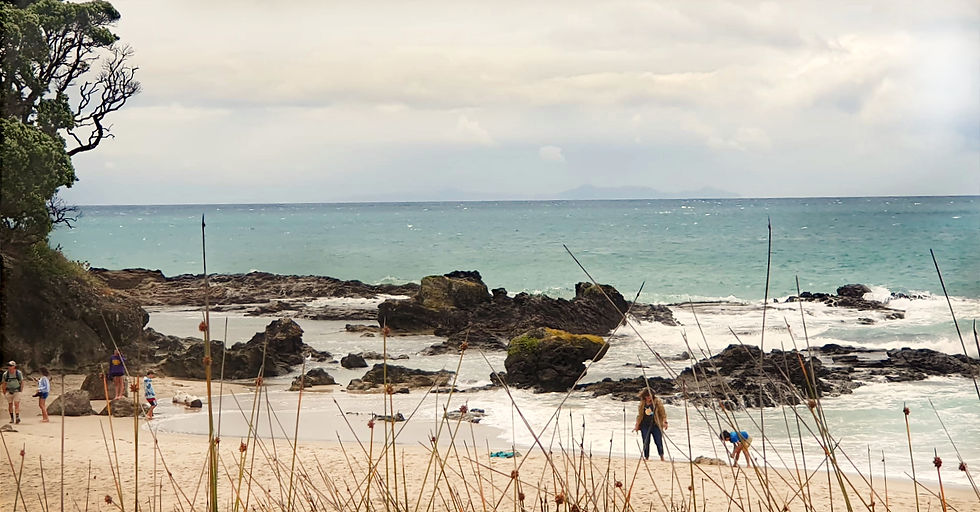
A beach you meant to “just stop at” turns into an hour of watching light move across the water.
A village that barely registers at the planning stage becomes the place you remember most clearly later.
That is the trick of the Coromandel Peninsula.
It is famous for a handful of obvious places: Cathedral Cove, Hot Water Beach, the summer rush around Whitianga.
Yet the real character sits in the spaces between them: the bends in the road, the estuaries, the small settlements, the pohutukawa edges, the hills that keep interrupting your schedule.
This is not a region that rewards speed.
The Coromandel is best travelled slowly, with fewer stops, more pauses, and a healthy suspicion of any itinerary that tries to “do” the peninsula in a day.
Use this guide as the starting point for exploring the Coromandel slowly.
Why Visit The Coromandel?
The Coromandel is one of New Zealand’s most distinctive coastal regions: part beach escape, part bush retreat, part road-trip challenge, part small-town wander.
It has golden beaches and wild surf, sheltered bays and forested ranges, old gold-mining towns and quiet coastal settlements. It can feel sunny and holiday-bright one moment, then misty, moody and remote the next.
That contrast is what makes it so rewarding.
Many visitors arrive looking for the postcard version of the Coromandel. They want Cathedral Cove, Hot Water Beach, blue water, summer weather and a neat list of highlights. There is nothing wrong with that, but the peninsula is far more interesting when you stop treating it like a checklist.
The best Coromandel experiences often come from slowing down enough to notice where you are.
A quiet morning in Kuaotunu.
A detour to Whangapoua.
A pause above an estuary.
A rainy drive through native bush.
A beach walk when the weather is not quite behaving.
A small-town bakery stop that somehow becomes the emotional centre of the day.
That is the Coromandel worth travelling for.
Where Is The Coromandel Peninsula?
The Coromandel Peninsula sits on the eastern side of New Zealand’s North Island, between the Hauraki Gulf and the Bay of Plenty.
It is close enough to Auckland, Hamilton and Tauranga to be a popular holiday region, but the geography makes it feel much further away than the distance suggests.
The roads are winding, the ranges are steep, and the coastline folds in and out of bays, headlands and small settlements.
This matters when planning a trip.
On paper, places can look close together. In reality, Coromandel travel often takes longer than expected. Roads are scenic but slow, especially around the coast and across the ranges. That is not a problem if you plan for it. In fact, it is part of the point.
The Coromandel is not a motorway destination.
It is a place where the journey shapes the experience.
The Best Way To Experience The Coromandel
The best way to experience the Coromandel is to choose a base or a gentle loop and resist the urge to cram too much into each day.
This is a peninsula for:
slow coastal drives
beach walks
small village stops
scenic detours
weather-watching
photography
bush-and-beach combinations
unplanned pauses
It is not ideal for rushing from one famous attraction to another while pretending the driving times are just numbers.

A good Coromandel trip should have breathing room. Choose one area to explore properly, or build a loop with short driving days. Leave gaps in the itinerary. Let the weather change your plans. Give yourself permission to stop somewhere simply because the light looks good.
That is usually where the best bits are.
Coromandel Town: Heritage, Hills And A Slower Start
Coromandel Town is one of the best places to understand the older character of the peninsula.
It has a different feel from the beach settlements on the eastern side. The pace is slower, the history is more visible, and the surrounding hills give it a tucked-away quality. This is a good place for wandering rather than rushing: cafés, galleries, heritage buildings, short walks, and a sense of the Coromandel before it became mainly associated with summer beach holidays.
Coromandel Town also works well as a base for exploring the western side of the peninsula. It is especially useful if you are interested in scenic drives, heritage, local food, and quieter coastal corners.
This side of the peninsula is not always as glossy as the eastern beaches, but it has depth. It feels lived-in, layered and slightly less eager to perform.
Whitianga And Mercury Bay: The Familiar Coromandel
Whitianga and Mercury Bay are among the most popular parts of the Coromandel, and for good reason.
This area gives easy access to beaches, boat trips, cafés, accommodation, and some of the region’s best-known attractions. It is practical, lively in summer, and a natural base for first-time visitors.
From here, many travellers head towards Cathedral Cove, Hahei and Hot Water Beach. These places are famous for a reason, but they are also where the Coromandel can feel busiest and most checklist-driven.
The key is not to avoid them entirely.
The key is to approach them with realistic expectations.
Go early if needed. Check access before planning around a specific walk or beach. Allow more time than you think. And balance the famous stops with quieter places nearby so your whole trip does not become a queue for the same postcard.
Mercury Bay can be beautiful, but it is better when you give yourself room to step sideways from the obvious.
Kuaotunu: The Coromandel At A Gentler Pace
Kuaotunu is one of the places that captures the quieter charm of the Coromandel.
It is small, coastal and relaxed, with the kind of understated atmosphere that makes you slow down almost without deciding to.
This is not a place for a packed sightseeing list.
It is a place for beach wandering, local food, soft evening light, and noticing the rhythm of a settlement that has not been overcomplicated.
Kuaotunu is also a useful reminder that the Coromandel does not need to be dramatic to be memorable.
Not every stop has to be a landmark. Sometimes the appeal is simply a beach, a road, a view, a pause, and the feeling that you have finally stopped hurrying.
Whangapoua And New Chums Beach: Beauty With A Warning Label
Whangapoua is known partly because of New Chums Beach, often described as one of New Zealand’s most beautiful beaches.
It is beautiful. It is also a good example of what happens when a “hidden gem” is no longer very hidden.
That does not mean it is not worth visiting.
It means it should be visited with care, patience and realistic expectations. Access, tides, parking, weather and visitor numbers all matter. So does respecting the landscape rather than treating it as a backdrop you are entitled to consume.
Whangapoua itself deserves more than being treated as a launchpad for one famous beach. The wider area has that classic northern Coromandel feeling: coastal, slightly removed, and shaped by the fact that getting there takes intention.
Go slowly.
Check conditions.
Leave no trace.
And remember that the places most often called “untouched” are usually the ones most vulnerable to being touched too much.
Onemana: A Quieter Coromandel Beach Escape
Onemana is a good example of the Coromandel’s softer side.
It does not shout as loudly as the famous names.
That is part of its appeal.
It is the kind of beach settlement that suits slow mornings, relaxed walks, and travellers who do not need every place to come with a headline.
For Best Bits style travel, places like Onemana matter because they help balance the peninsula. They remind you that the Coromandel is not just a series of attractions. It is also a collection of lived-in coastal communities, each with its own pace and personality.
Onemana is less about ticking off a must-see and more about staying long enough to feel the difference between one beach town and another.
Driving The Coromandel Peninsula
Driving is one of the defining Coromandel experiences.
The roads are beautiful, but they are not fast.
They twist around coastline, climb through hills, pass through bush, and frequently make a mockery of optimistic travel planning.
This is especially important if you are building a Coromandel road trip. Do not plan your days as though you are driving on straight inland highways. Distances can be deceptive, and the road itself demands attention.
That said, the driving is also part of the magic.
A slow Coromandel drive gives you changing views, sudden glimpses of water, pockets of forest, small settlements, and the sense that the peninsula is unfolding rather than simply being crossed. The best approach is to keep your daily distances modest and treat the road as part of the itinerary.
Build in time for stops you did not plan.
You will need them.
How Many Days Do You Need In The Coromandel?
You can visit part of the Coromandel in a weekend, but the peninsula is better with more time.
A short trip works best if you choose one area and stay focused. For example, you might base yourself around Whitianga and Mercury Bay, or explore Coromandel Town and the western side, or choose a quieter beach settlement and keep the pace deliberately low.
For a fuller Coromandel loop, allow at least four to five days.
More is better if you want beach time, scenic detours, photography, bush walks, and the freedom to adjust around the weather.
The biggest mistake is trying to see everything in too little time.
The Coromandel rewards travellers who leave things out.
SAVVY SWAPS
The best Coromandel experiences are often:
beside the famous destinations rather than directly inside them.
Instead of:
peak-hour Cathedral Cove
overcrowded beaches
summer traffic queues
consider:
quieter villages
shoulder season visits
sunrise beach walks
estuary settlements
gravel-road detours
hidden bays
regional coastal drives
The quieter side of the Coromandel is often the most memorable.
WHAT IS THE BEST TIME TO VISIT THE COROMANDEL?
Summer
Classic beach atmosphere, swimming, boating, coastal energy, long daylight hours.
Shoulder Season
Arguably the peninsula’s best experience:
fewer crowds
softer light
quieter roads
cooler walking conditions
more atmospheric scenery
Winter
Stormy coastlines, misty forests, quieter villages, dramatic photography conditions, cosy cafés, and slower travel rhythms.
CONTINUE EXPLORING THE COROMANDEL
Regional Village Discoveries
Scenic Detours
Pacific Coast Highway
Thames Coast Road
Waterfalls & Gravel Roads
Coastal Lookouts
quieter coastal journeys
hidden beaches
off-season travel
regional communities
coastal photography
weather & atmosphere
beaches & estuaries
pohutukawa season
The Coromandel is not a place to rush through.
Let the map be wrong.
Let the road take longer.
Let the weather change things.
Let the famous stops be only part of the story.
The best of the Coromandel often begins when the itinerary loosens its grip.


