


Citizen Science Travel in New Zealand
- Sarah-Jane Lee
- Mar 22
- 2 min read

Updated: May 13
How to Contribute: regenerative holidays
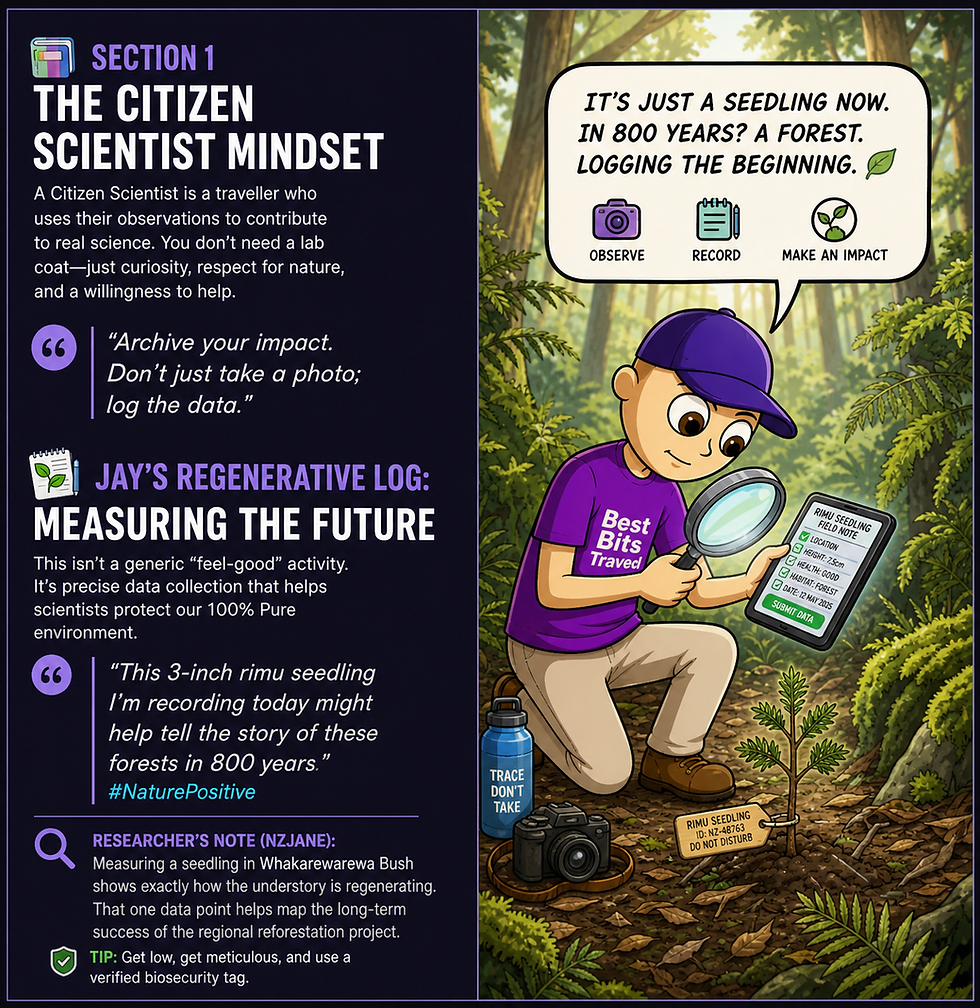
🧠 What Is Citizen Science Travel?
Citizen science is the practice of everyday people contributing to real scientific research, often by collecting or sharing data.
In New Zealand, this includes:
logging wildlife sightings
tracking native species
monitoring environmental change
These contributions help scientists understand ecosystems at a scale that would otherwise be impossible.
👉 In travel terms: you’re no longer just visiting, you’re participating
🌱 Why Citizen Science Fits Regenerative Travel
Citizen science is one of the clearest examples of regenerative travel in action.
Instead of: passive sightseeing
You:
contribute to conservation data
support long-term environmental decisions
help protect biodiversity
👉 It transforms tourism from consumption → contribution
In some projects, even simple actions like photographing species can feed into global biodiversity databases used by researchers worldwide. These aren’t formal “tours: They’re opportunities embedded in your travel.
🐦 1. Record Wildlife with iNaturalist NZ
Photograph plants, birds, and insects
Upload observations to a national database
Help track species distribution
👉 One of the easiest ways to contribute while travelling
🌳 2. Join a BioBlitz or Local Survey
Intensive biodiversity surveys over 24 hours
Open to the public
Help identify species in a specific area
These events turn conservation into a shared, hands-on experience.
🐦 3. Take Part in National Bird Counts
Great Kererū Count
NZ Garden Bird Survey
These large-scale projects rely on public participation to monitor native species health.
🌊 4. Monitor Coastlines & Marine Environments
Marine debris surveys
Coastal biodiversity tracking
👉 Helps protect fragile coastal ecosystems
🦟 5. Contribute to Species Tracking Projects
Mosquito census
Pest reporting apps
Invasive species tracking
Even small observations help build national datasets.
🌌 6. Participate in Digital Citizen Science (Anywhere)
You don’t even need to be outdoors:
Classify species images
help digitise museum collections
contribute to research remotely
👉 Travel extends beyond location—it becomes ongoing engagement
🔁 Savvy Swap
Travel Like a Participant
Instead of: Observing wildlife → Record and share sightings Instead of: Visiting a sanctuary → Contribute data that supports it Instead of: Consuming experiences → Participate in them 👉 The shift is simple: from seeing → contributing🧭How to Get Started
Download apps like iNaturalist NZr
Join local conservation events
Ask guides about participation opportunities.
Beach Cleans: Spend 30 minutes with a Sustainable Coastlines kit on any NZ beach
Native Seed Collection: Help approved nurseries gather seeds .
👉 No scientific background required; just curiosity
🌿Why New Zealand Is Ideal for Citizen Science Travel
New Zealand’s environment makes it uniquely suited for this type of travel:
High number of endemic species
Active conservation challenges (predators, habitat loss)
Strong community involvement
Citizen science fills a critical gap; helping researchers monitor ecosystems across a complex landscape.
🔗Pair citizen science with:
Wildlife encounters (kiwi, penguins, marine life)
Remote destinations (where data is most valuable)
👉 This is where your travel becomes part of a larger system
✈️ Final Thought
Citizen science travel is one of the simplest ways to make your trip matter.
No extra cost. No special equipment. Just attention. And in a place like New Zealand, that attention contributes to something real. Ready to go deeper into the 'Action, Not Promises' mandate?


